












طرح باحثون من الشبكة الشرق أوسطية للصحة المجتمعية (امفنت) إطاراً مفاهيمياً جديداً يعيد تعريف كيفية فهم النزاعات الحديثة ضمن سياق الصحة العالمية.
يقدم هذا الإطار – المنشور في مجلة علم الأوبئة والصحة العالمية (Journal of Epidemiology and Global Health) تحت عنوان “النزاعات الحديثة كصدمات لمنظومة الصحة العالمية: إطار متعدد المستويات” – نموذجاً تحليلياً يدرس كيف ترتد شظايا الحروب المسلحة لتُحدث آثاراً صحية متسلسلة ومتتابعة تتجاوز بقعة الصراع الجغرافي لتضرب المنظومة الدولية ككل.
وينطلق الإطار من فرضية أن اختزال النزاعات الحديثة في البُعدين الإنساني والأمني لم يعد مجدياً؛ فالصراعات في المناطق الاستراتيجية تفجر صدمات عابرة للحدود تضرب أسواق الطاقة، والأمن الغذائي، ومسارات النقل، وسلاسل الإمداد الطبية عالمياً.
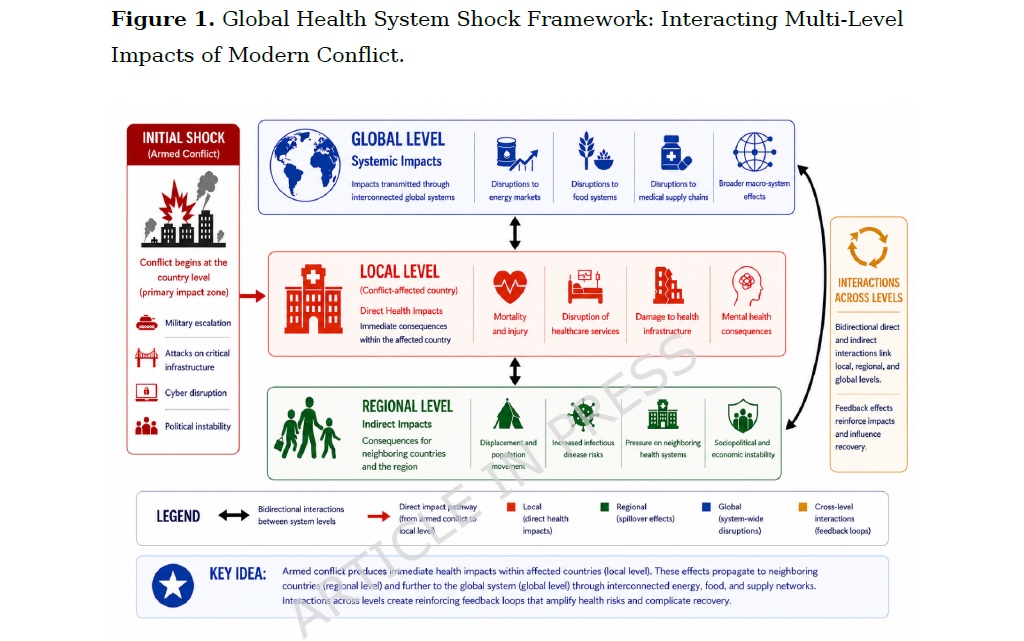
ويُفكك هذا الإطار تداعيات الصراع إلى ثلاثة مستويات متداخلة وهي:
• محلية مباشرة: تشمل الوفيات، والإصابات، وانهيار الخدمات الصحية، وتدمير البنية التحتية الصحية
• إقليمية عابرة: تتمثل في موجات النزوح، وتفشي الأوبئة، والضغط المتزايد على المنظومات الصحية للجوار
• هيكلية عالمية: تنتقل تداعياتها عبر شلل الأسواق الحيوية للطاقة، والغذاء، والإمدادات الطبية الدولية
إطار صدمات منظومة الصحة العالمية: الآثار متعددة المستويات للنزاعات الحديثة
ويوضح الإطار كيف يرتد شلل الممرات التجارية الحيوية وطرق إمداد الطاقة ليتسبب في شح الأدوية واللقاحات، وتعميق أزمات الأمن الغذائي، ورفع الكلفة التشغيلية للمرافق الطبية، مما يضع صحة المجتمعات تحت وطأة ضغوط غير مسبوقة.
كما يؤصل الإطار لمفهوم “الموجات الارتدادية المتشابكة”؛ مؤكداً أن تداعيات الحروب تتفجر وتنتشر بالتزامن عبر مختلف القطاعات والبلدان في آنٍ واحد، ليتغذى بعضها على بعض وتتضاعف كأثر صدمة مركبة بدلاً من الحدوث المتعاقب الخطّي.
وبناءً على هذه المعطيات، يخلص الباحثون إلى أن تعزيز مرونة الأنظمة الصحية يستدعي تجاوز أطر الجاهزية القطاعية الضيقة، وصياغة مقاربات تكاملية تجمع منظومات الصحة، والطاقة، والنقل، والزراعة، والخدمات اللوجستية، والحوكمة في سياق واحد.
ويأتي هذا الإطار المبتكر ليوجه النقاشات الدولية الحالية حول الأمن الصحي وبناء المنعة، مطالباً بوضع “الجاهزية لإدارة أزمات النزاع” كأولوية قصوى ودائمة على أجندة الصحة العالمية.
الإطار متاح حالياً بنسخته الأولية قيد النشر (Article in Press) في مجلة علم الأوبئة والصحة العالمية (Journal of Epidemiology and Global Health).
– انتهى-
الشــبكة الشــرق أوســطية للصحــة المجتمعيــة (امفنت)
الشــبكة الشــرق أوســطية للصحــة المجتمعيــة (امفنت) هــي منظمــة غيــر ربحيــة تعمــل فــي مجــال الصحــة العامــة وتقــود جهــود الدعــم الهادفــة لتحســين الصحــة فــي منطقــة شــرق المتوســط وخارجهــا. تحظــى امفنــت والتــي تأسســت فــي عــام ،2009 بمسـتوى عالـي مـن التقديـر فـي مجال تطويــر الوبائيــات التطبيقيــة، ودعــم برامـج الصحـة العامـة، وتعزيـز بحـوث الصحــة العامــة، وتعزيــز التواصــل مــن أجــل تحســين ممارســات الصحــة العامــة. وتعمــل امفنــت بشــكل أساســي مــع وزارات الصحــة وهيئــات الصحــة العامــة، كمــا تتعــاون مــع مختلـف أصحـاب المصلحـة فـي نظام الصحــة العامــة مــن وزارات الصحــة، والمنظمــات المجتمعيــة، ومعاهــد البحــوث، والجامعــات، ومؤسســات القطــاع الخــاص، ووكالات الأمم المتحـدة، والمنظمـات غيـر الحكوميـة، والمنظمــات الدوليــة، وغيرهــا.
New Framework Reframing Modern Conflicts as Global Health System Shocks
Researchers from the Eastern Mediterranean Public Health Network (EMPHNET) have introduced a new framework that redefines how modern conflicts are understood within global health.
Published as a perspective article in the Journal of Epidemiology and Global Health, “Modern Conflicts as Global Health System Shocks: A Multi-Level Framework” proposes the Global Health System Shock Framework, a new approach that examines how armed conflicts generate cascading health impacts that extend far beyond conflict zones.
The framework argues that modern conflicts should no longer be viewed solely through humanitarian or security lenses. Instead, conflicts occurring in strategically important regions can trigger interconnected disruptions affecting health systems, energy markets, food security, transportation routes, and medical supply chains globally.
The framework conceptualizes conflict impacts across three interconnected levels:
• Local impacts: mortality, injuries, disruption of healthcare services, and damage to health infrastructure
• Regional spillover effects: displacement, disease risks, and additional pressure on neighboring health systems
• Global systemic disruptions: impacts transmitted through energy markets, food systems, and medical supply chains
Global Health System Shock Framework: Interacting Multi-Level Impacts of Modern Conflict.
The article highlights how disruptions in critical trade corridors, energy routes, and supply networks can contribute to shortages of medicines and vaccines, food insecurity, increased operational costs for healthcare systems, and broader pressures on population health.
The framework also introduces the concept of interacting shockwaves, emphasizing that conflict impacts do not occur sequentially but instead propagate simultaneously across sectors and countries, reinforcing one another.
Commenting on the publication, the authors emphasize that strengthening health resilience requires moving beyond health-sector preparedness alone toward integrated approaches involving health, energy, transport, agriculture, logistics, and governance systems.
This perspective contributes to ongoing discussions on health security, preparedness, and resilient systems and calls for conflict preparedness to be recognized as a broader global health priority.
The article is published in the Journal of Epidemiology and Global Health and is currently available as an article in press.
-ENDS-
About EMPHNET
The Eastern Mediterranean Public Health Network (EMPHNET) is a public health nonprofit organization leading support for better health in the Eastern Mediterranean Region (EMR) and beyond. Established in 2009, EMPHNET has been recognized for advancing applied epidemiology, supporting public health programs, advancing public health research, and empowering communication and networking for improved public health practice. EMPHNET works mainly with ministries of health and public health agencies, while collaborating with stakeholders across the public health system including relevant ministries, universities, community organizations, research institutes, the private sector, nongovernmental organizations (NGOs), international organizations, UN agencies, among others.