














Doha 🇶🇦 —
As artificial intelligence moves beyond being a technology added to an organization and becomes an intelligent system reshaping the way work, knowledge, and decisions are structured, the nature of the conversation itself is changing.
From Doha, Dr. Marwa bint Salman Al-Salah, Founder and CEO of Marwa Salah Information Technology and Artificial Intelligence Foundation, brought this perspective to QFEX 2026 on September 29–30, 2026. Her participation brought together two complementary dimensions: strategic dialogue on the future of work and the evaluation of innovation and startups—connected by an integrated vision for the future of the enterprise in the age of intelligent systems.
Dr. Al-Salah’s participation in Doha was not simply an appearance at a technology event. It represented another milestone in a research and practical journey that approaches artificial intelligence from a perspective broader than applications and tools—toward rethinking the very structure of the enterprise: how it creates and manages knowledge, how it makes decisions, how it learns, and how responsibility is distributed between humans and intelligent systems.
From the Future of Jobs to the Future of the Enterprise
During the session “AI, Jobs & the Human Future: Leadership, Talent & the Future of Work,” Dr. Al-Salah contributed to a discussion addressing the future of work, leadership, and talent at a time when organizations worldwide are moving toward new models that bring humans and artificial intelligence together within the same working environment.
Within this context, she presented her vision of the Smart Digital Employee as more than a tool for task automation.
Under this model, the digital employee is connected to a clearly defined organizational role, institutional knowledge, context, permissions, and responsibilities. It operates within an intelligent framework capable of interacting with information, decisions, and the working environment in real time.
This shifts the conversation from replacing individual tasks with technological tools toward reallocating cognitive and operational work between humans and intelligent systems, while keeping accountability, governance, and trust at the core of the new human–AI relationship.
Yet this vision extends beyond the digital employee itself.
The Cognitive Enterprise: The Next Stage of Transformation
As a natural extension of this approach, Dr. Al-Salah advances the concept of the Cognitive Enterprise as a broader framework for institutional transformation.
The Cognitive Enterprise does not treat artificial intelligence as an independent technological layer. Instead, AI becomes part of an integrated knowledge system connected to data, context, accumulated experience, learning, information analysis, and decision support.
From this perspective, the value of artificial intelligence within an organization is no longer measured solely by how quickly a task can be completed. Its deeper value lies in the organization’s ability to understand the knowledge it possesses, connect that knowledge to context, transform it into decisions, and continuously learn from the outcomes of those decisions.
This transition represents a core dimension of the transformation Dr. Al-Salah has been pursuing for years: moving from digital transformation, which adds technology to an organization, toward cognitive transformation, which restructures the organization around knowledge and intelligence.
From the Dialogue Platform to the Innovation Evaluation Platform
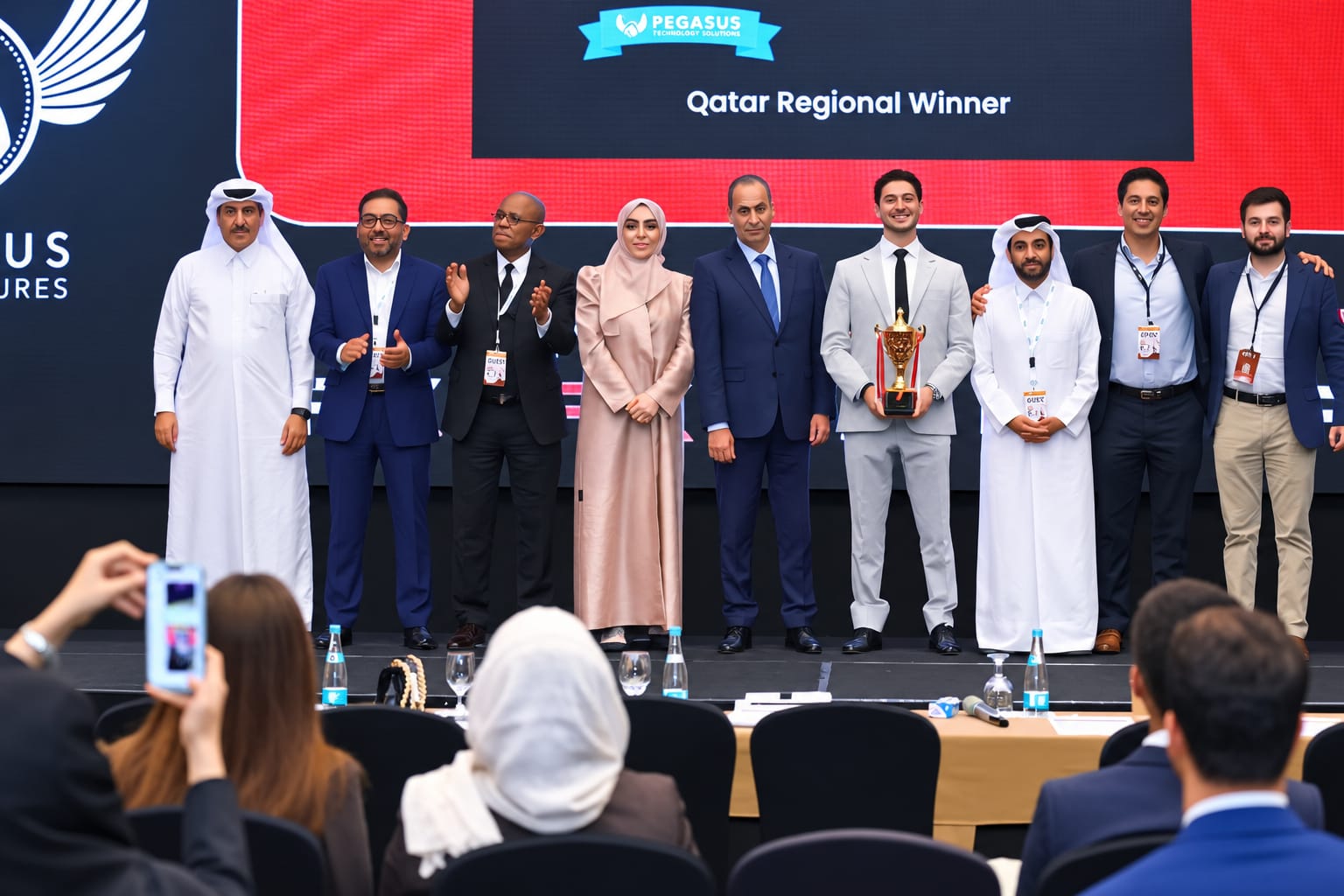
The Doha engagement was further strengthened by Dr. Al-Salah’s participation as a judge at the Startup World Cup – Doha Regional Final 2026, moving from discussing the future of innovation to directly participating in the evaluation of innovation itself.
This added a practical dimension to her participation, bringing together experience in developing digital solutions with the ability to assess emerging ventures and their capacity to transform an idea into a product, a product into a business model, and a business model into a scalable enterprise.
True innovation is not defined by the novelty of an idea alone. It is determined by its ability to address a genuine need, demonstrate an applicable model, create sustainable economic value, and prove its potential to scale beyond the initial stage.
This perspective aligns with a practical track extending across more than 22 countries and more than 22 fields of artificial intelligence, through work and projects combining research and development, solution design, institutional models, and the transformation of technological ideas into scalable, applicable systems.
Aafaq Group: Creating a Space That Gives Innovation Room to Grow
Within this broader landscape, Aafaq Group played an important professional and organizational role in creating a platform that brought together expertise across technology, finance, investment, entrepreneurship, and the digital and financial economy.
Dr. Al-Salah extends her special appreciation to Dr. Khaldoun Naseer, Ms. Suhair Al-Ashqar, and the Aafaq Group team for their efforts in organizing an event of this scale and diversity, and for creating a professional environment that enabled meaningful dialogue, knowledge exchange, and new avenues for collaboration.
The significance of such platforms lies in their ability to bring together ideas, expertise, capital, and innovation—creating an environment where technological visions can meet the real needs of markets and institutions.
From this perspective, QFEX 2026 was more than a forum for discussing artificial intelligence. It was an interactive space where the future of work intersected with investment, innovation, and venture creation.
A Presence That Extends Beyond Participation to Knowledge Creation
Dr. Al-Salah’s presence in Doha represents a continuation of a professional and intellectual trajectory that brings together research, thought, and institutional application.
Her vision of the Smart Digital Employee intersects with the broader concept of the Cognitive Enterprise, while her role in evaluating startups places these ideas against the practical standards of market relevance, applicability, scalability, and growth.
Across two days, three interconnected dimensions came together:
How humans work with artificial intelligence.
How organizations can redesign their knowledge structures around intelligence.
How technological ideas can become scalable companies and solutions.
Together, these dimensions reflect a broader direction in Dr. Al-Salah’s work: approaching artificial intelligence not as an additional technological tool, but as a new component in the architecture of work, knowledge, the economy, and the enterprise itself.
From Doha to the Next Stage
From Doha, the vision moves toward a stage in which the future of work becomes inseparable from the future of the enterprise itself.
The organizations that will compete most effectively in the intelligent economy will not necessarily be those that possess the greatest number of technological tools. They will be those most capable of building knowledge, understanding context, managing intelligence, defining accountability, transforming data into decisions, and continuously learning from their outcomes.
Doha marked another milestone in this journey—where the future of work met the future of the enterprise, and technology met the creation of innovation.